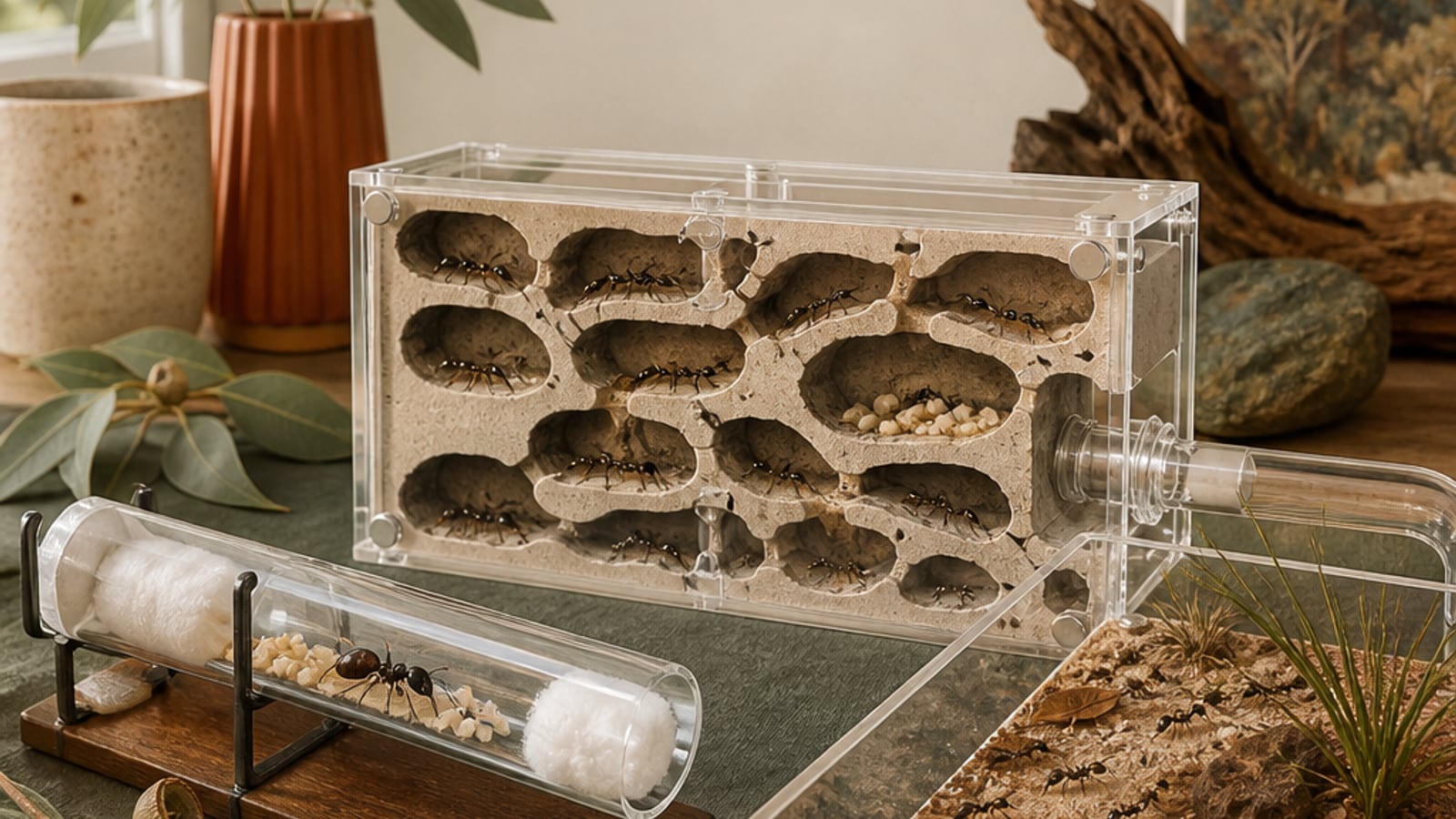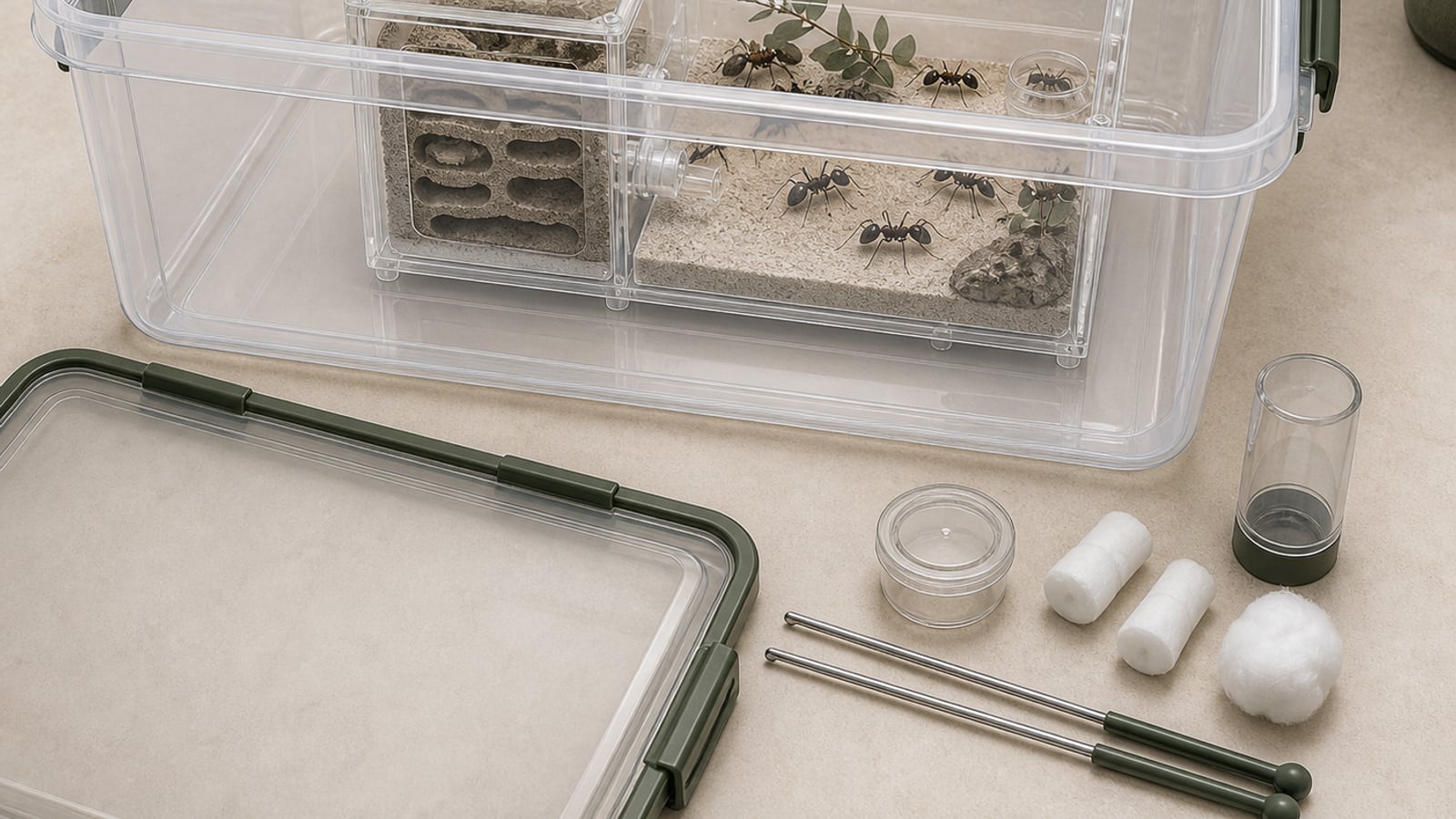
A queen found after rain or a colony offered for sale can create a powerful sense of urgency. It may feel as though you need to decide immediately or miss the opportunity.
That is exactly when a checklist is most useful.
The best time to solve an identification, containment or care problem is before the ants enter your home. A good pre-arrival check is allowed to end with “not this colony” or “not yet”. Walking away from an unsuitable colony is a successful ant-keeping decision.
Here are seven checks to complete before collecting, buying or accepting ants.
1. What ant is it?
Start with the strongest identification the evidence supports. That may be a species, a species group, a genus or simply “unknown”.
False precision is not helpful. A confident-looking marketplace label may still be wrong, while an honest genus-level identification can give you a safer starting point.
Ask for clear photographs from several useful angles and a general collection location. Record how confident the identification is rather than allowing a tentative guess to become a fact in your care notes.
Identity can affect:
- whether the queen needs to forage during founding
- likely worker size and escape risk
- sting or defensive risk
- mature colony scale
- climate and housing needs
- whether collection or movement restrictions may apply
If uncertainty could change the safety plan, founding method or legal position, pause until you have better information.
2. Where did the colony come from?
Record the source, approximate date and general locality. Note whether the colony was collected from the wild, produced in captivity or has an uncertain history.
Do not treat “captive-bred” as a complete explanation. Ask what the seller means by it. A wild-collected queen that later raises workers in captivity has not become captive-bred simply because workers are now present.
Origin information helps you assess the care advice you receive and preserves useful context if the colony changes hands later. It can also matter when movement rules, biosecurity areas or local conditions are involved.
You do not need to publish a sensitive collection site. Keep a privacy-safe locality in the colony’s own record.
3. Can you legally collect, keep and move it?
Requirements can differ by species, place, land manager and destination. They can also change.
Before collecting, confirm that you have permission to be on the land and to remove animals from it. Protected areas and other managed land may have their own restrictions.
Before buying or transporting a colony, check the current official information for both the starting point and destination. A movement across a state border or biosecurity zone deserves particular attention. The fact that a seller is willing to post a colony does not prove that the movement is permitted.
If the information remains unclear, ask the responsible authority before proceeding. A listing, forum comment or seller assurance is not a substitute for the rules that apply to your situation.
Fire-ant biosecurity zones can change monthly. Use the live official address checker instead of relying on a copied suburb list.
4. Does the colony fit the household?
Consider the people and animals who share the home, not only the person buying the ants.
Ask:
- Can children, pets or visitors reach the enclosure?
- Is there a known allergy history in the household?
- Can the colony be serviced without carrying an open setup across a room?
- Is everyone comfortable with feeder insects?
- Could a cleaner, housemate or visitor move the enclosure unknowingly?
- Do tenancy, strata or accommodation rules need to be checked?
Choose the species to suit the household’s real risk tolerance. Do not acquire a stinging or highly defensive species with the idea that you will improve the safety arrangements later.
Bull ants are compelling animals, but their sting risk, speed and maintenance demands make them an advanced responsibility rather than a routine first colony.
5. Is containment ready and tested?
The main enclosure should be ready before the ants arrive. You also need a second layer of containment for opening, feeding or connecting equipment.
Inspect every lid, plug, join, mesh panel and connector with the smallest future worker in mind. A gap that contains the queen may fail as soon as her first, much smaller workers emerge.
Prepare:
- a secure stage-appropriate enclosure
- a smooth-sided secondary working container
- spare tubes and plugs
- suitable connectors
- long tools and soft brushes
- a stable storage tray or rack
- an escape response
Test the empty equipment in the positions and movements it will experience during normal care. Escape barriers can be useful, but they need maintenance and do not replace a physically secure enclosure.
6. Can you meet the colony’s care needs?
A neat tube is not proof that the care plan is correct.
Before arrival, find out whether the queen’s founding strategy is known. A queen that normally forages needs safe food access. A queen that can found from her own reserves may benefit from much less disturbance. Appearance alone is not a reliable way to decide between those strategies.
Then look beyond founding. Can you provide:
- reliable water
- suitable carbohydrates and prey when needed
- safe feeding and waste removal
- replacement equipment
- stable conditions without direct sun
- care during holidays or illness
- room and budget for mature growth
Plan for the colony the ants may become, not just the colony in today’s photograph.
7. What is the lifelong plan?
Decide before acquisition that the colony will never be released.
Captive ants should not be returned to the wild, even when they are believed to be native to the area. Identity may be wrong, locality may be inappropriate and captivity can create risks that are not visible.
Name a backup carer and give them written instructions. Also decide where you would seek responsible rehoming advice if illness, housing changes or another major event made continued care impossible.
If you cannot provide a safe and permitted home through the foreseeable stages of the colony, waiting is the responsible choice.
Turn the answers into a colony passport
Keep the seven checks as a one-page record. Include:
- working identification and confidence
- source, date and privacy-safe locality
- when current requirements were last checked
- the colony contents described by the seller or collector
- the best available founding information
- expected risks and containment features
- initial housing and feeding plan
- emergency contact and backup carer
- permanent no-release status
This “colony passport” protects important information from being lost and gives future care decisions a much stronger foundation.
Safety and current-rules note: This article cannot confirm what is permitted for a particular species, collection site or destination. Check current official government and land-manager information before collecting, keeping, selling or moving ants. Never handle an unidentified queen directly. For suspected anaphylaxis, follow the person’s current medical action plan, use an available adrenaline autoinjector and call Triple Zero on 000.
Build the plan before the colony
These seven checks are a strong starting point, but each answer leads to another practical decision about species choice, founding strategy, equipment, feeding, housing and long-term care.