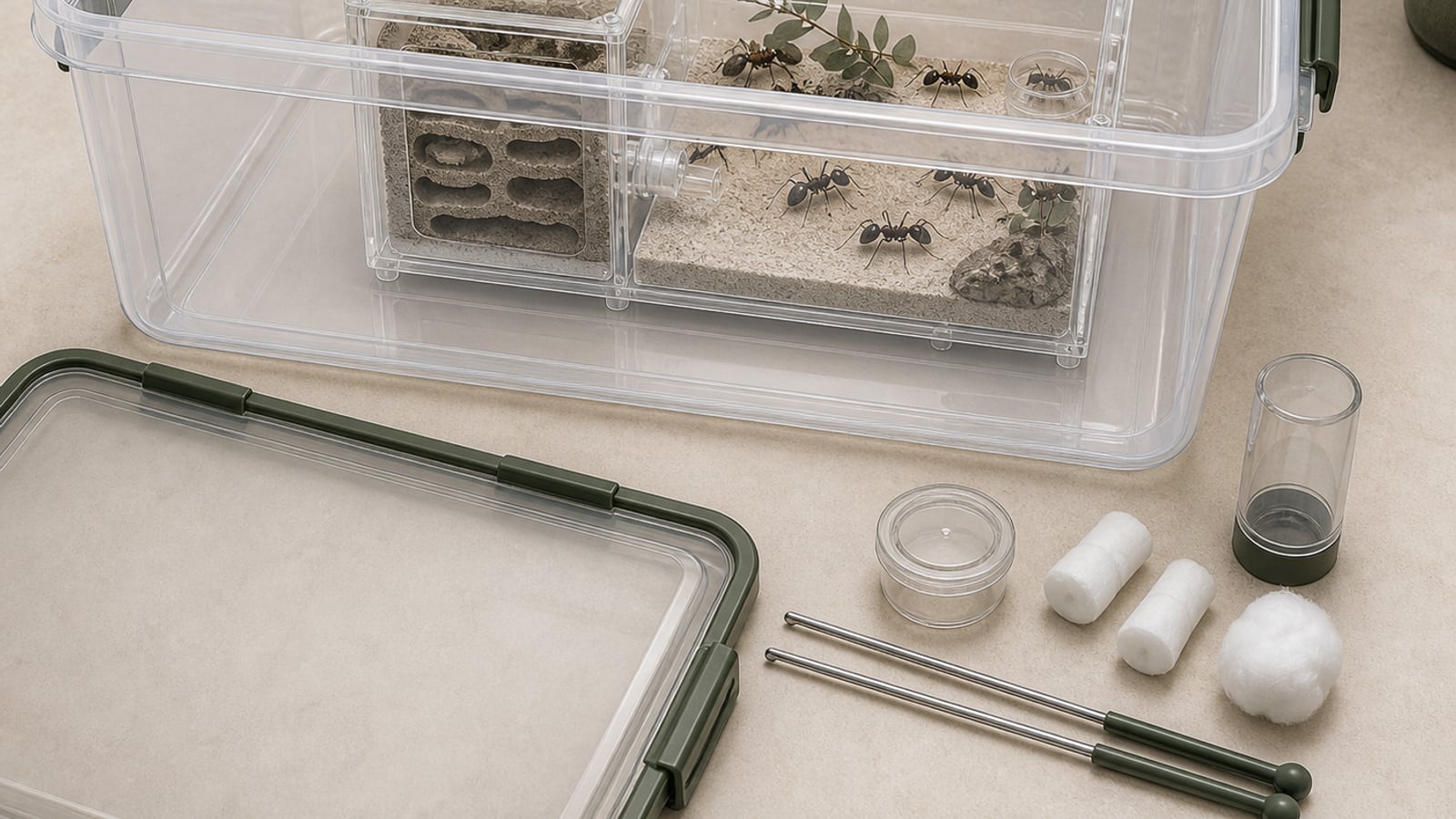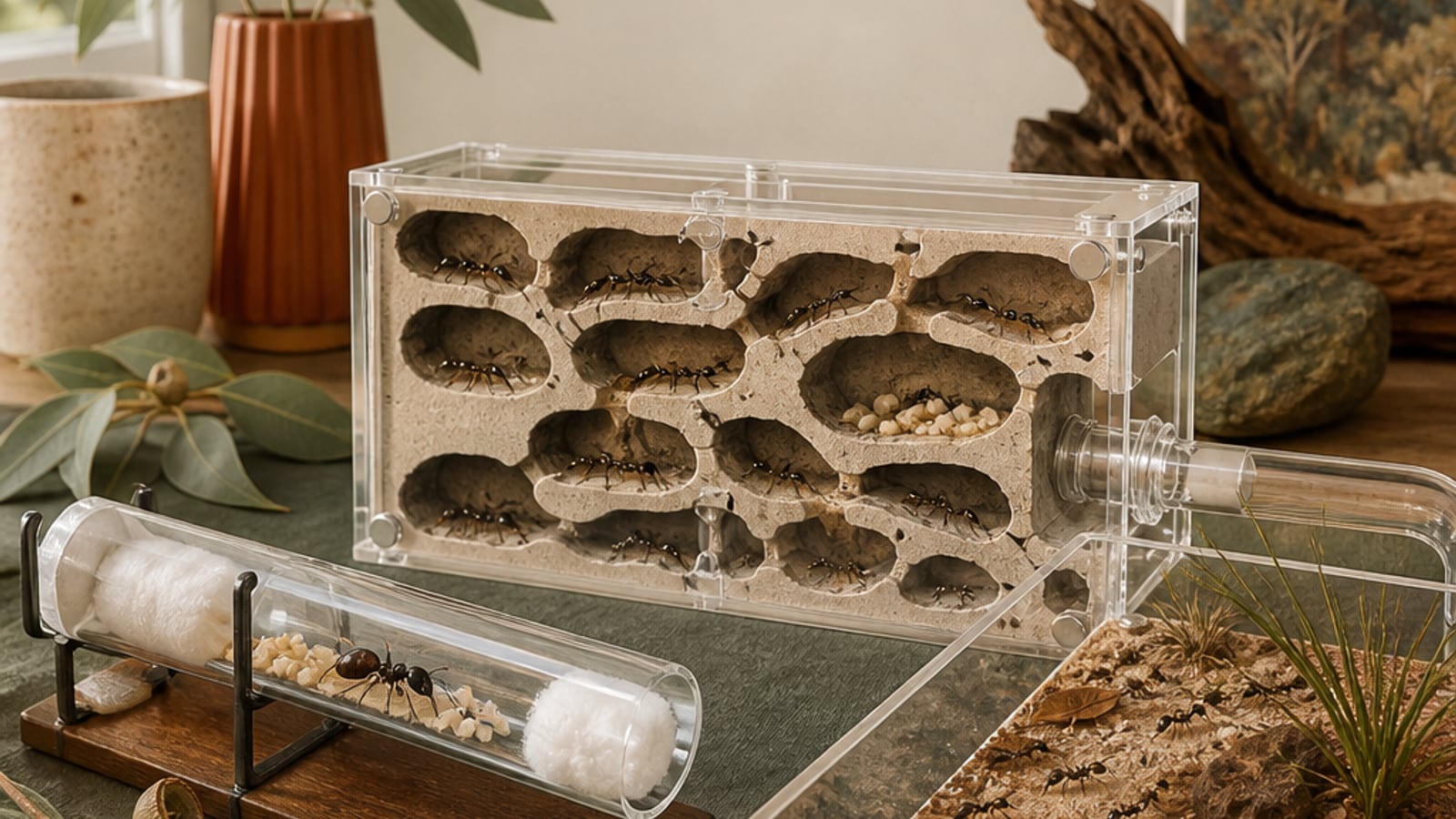
Ant keeping is quiet, fascinating and often possible in a much smaller space than people expect. A founding queen may live in a simple test-tube setup, and watching her first workers emerge can be one of the most rewarding stages of the hobby.
That small beginning can also create the wrong impression. You are not only deciding whether your home has room for one tube. You are deciding whether it can safely support a colony as it grows, needs more food and produces more active workers.
The right question is not simply, “Do I want ants?” It is, “Can this household support the ants I am considering through every likely stage of their care?”
Picture the household on an ordinary day
It is easy to imagine the perfect version of ant keeping: a tidy enclosure, a calm feeding session and everyone in the home taking an interest.
A better test is to picture an ordinary busy week.
Where will you service the colony when you are tired? What happens if a pet bumps the shelf? Who checks the water when you are away? Is everyone comfortable with feeder insects being stored in the home? Could a child, visitor or cleaner move the enclosure without understanding it?
These are not reasons to avoid the hobby. They are the practical details that turn enthusiasm into responsible care.
Start with the people and animals who share the space
A high shelf is not automatically a secure location. The enclosure needs to be stable, away from direct sun and knocks, and inaccessible to anyone who should not touch it. You also need to be able to feed and maintain the colony without carrying an open setup through the room.
Young children should not be responsible for servicing ants that can sting. Pets may be attracted to movement, food or the enclosure itself. Visitors may not recognise that a small box contains live animals with an escape risk.
Allergy history matters too. A checklist cannot predict how someone will react to a sting, and a previous mild reaction does not guarantee that a future reaction will also be mild. For most new keepers, a manageable, lower-risk species is a much better household choice than bull ants or another highly defensive species.
The best first ant is not necessarily the most dramatic one. It is the one your household can contain and care for calmly.
Measure the real workload
A founding queen may require little day-to-day attention. If she succeeds, however, your responsibility increases.
A growing colony may need:
- regular access to water
- suitable carbohydrates and prey
- feeder-insect storage or a reliable food source
- waste removal and cleaning
- maintained escape barriers
- replacement tubes, plugs and connectors
- a larger or more modular enclosure
- records that help you notice changes over time
This does not mean ant keeping must become a major daily job. It means “low maintenance” should not be mistaken for “no planning”.
Think about the mature colony rather than only the queen in front of you. Some colonies remain relatively small. Others become numerous, highly active or demanding to service. If mature size is uncertain, choose a setup that can expand in stages and leave room in your budget for ordinary supplies and replacements.
Make sure the food is acceptable to everyone
Many colonies require suitable prey, particularly once larvae and workers are present. That can mean buying, storing or culturing feeder insects.
Discuss this before bringing ants home. It is unfair to assume a partner or housemate will become comfortable with insects in the cupboard or refrigerator after the colony arrives.
Also consider where feeding tools and colony-only cleaning supplies will be stored. A small, organised care area makes routine work easier and helps prevent household products or residues from reaching the ants.
Plan for holidays, illness and unexpected interruptions
Ants do not need entertainment when you travel, but they still need secure water, stable conditions and stage-appropriate feeding.
Choose a backup carer before you need one. Give them short written instructions covering:
- what to check
- what not to open
- how food is offered through the normal access point
- what an escape or failing water supply looks like
- who to contact if something goes wrong
Do not expect someone to learn a complicated enclosure during an emergency. A setup that only one person can safely operate is more fragile than it appears.
Take the household suitability test
Before choosing a colony, answer these questions honestly:
- Is there a stable, shaded location where access can be controlled?
- Can feeding, cleaning and transfers be done inside a larger secondary container?
- Is the species appropriate for the household’s sting and escape risk?
- Will every gap, join and connector contain its smallest workers?
- Is everyone comfortable with the food and feeder-insect arrangements?
- Can you afford recurring supplies, replacements and future expansion?
- Is there space for the colony’s likely mature size?
- Is there a named backup carer with simple written instructions?
- Have you checked any tenancy, strata or household rules that apply?
- Do you have a firm no-release plan and a responsible path to seek rehoming help if your circumstances change?
If several answers depend on equipment you plan to buy later, the setup is not ready yet. Prepare the system before the ants arrive.
Run a dry week
One of the best readiness tests does not involve ants at all.
Place the empty setup where you intend to keep it. Put the secondary container, tools, labels and care supplies in their proposed locations. Leave everything there for a week and notice what happens.
Does direct sun reach the shelf? Does a door slam nearby? Can a pet reach it? Does someone regularly place bags or laundry in the same area? Is there enough room to work without rushing?
You can solve every problem you find without disturbing a colony. This simple rehearsal may also show that another room, shelf or species would suit the household better.
“Not yet” is a useful answer
Failing the readiness test does not mean you cannot enjoy ants.
You can observe local foragers without collecting them, photograph ants after weather changes, learn common groups or practise building and leak-testing an empty founding setup. These activities develop the same patience and observation skills that good keeping requires.
You may discover that the household is suitable for a smaller, lower-risk species even if it is not suitable for the species you first wanted. Choosing well is part of the hobby, not something that happens before the hobby begins.
Safety and current-rules note: Requirements for collecting, keeping and moving ants can change, and household, tenancy or strata rules may also apply. Check current official information for your location and species before acquiring a colony. Never release captive ants. Anyone with a history of a whole-body sting reaction should seek medical advice before considering stinging ants. Suspected anaphylaxis is an emergency: follow the person’s action plan, use an available adrenaline autoinjector and call Triple Zero on 000.
Ready to plan your first colony properly?
The household test is only the beginning. The next step is to connect species choice, safe preparation, founding, feeding and long-term care rather than treating them as separate decisions.